Serving North Richland Hills, TX & Tarrant County
Tub-to-Shower Conversions in North Richland Hills, TX
Taking out a tub that may have been stepped over every day for forty or fifty years.
*Estimated payment with approved credit through Acorn Finance. Actual rate and terms vary.
North Richland Hills has been building homes since the early 1950s, and many of its bathrooms still have the tub that came with the house. A tub-to-shower conversion removes it and builds a low-entry walk-in shower in the same alcove.
For households where stepping over that tub has started to feel risky, it is usually the single most useful change to make.
A 1950s Farm Subdivision, Now Seventy Years On
North Richland Hills started in 1950, when Clarence Jones turned his farm into a residential development and borrowed the name of the successful Richland Hills subdivision just to the south. Residents voted to incorporate on April 25, 1953. By 1960 the new city had 8,662 people.
It kept building steadily for the next four decades: 16,514 residents in 1970, 30,592 in 1980, 45,895 in 1990 and 55,635 in 2000. Unlike suburbs farther out that boomed all at once, NRH added houses a decade at a time, and the Census Bureau puts the median year built at 1986, older than in many of the newer suburbs across DFW.
That long timeline means a wide range of bathrooms. The earliest homes typically have an enameled steel or cast-iron tub set into a tiled alcove, heavy and durable but with a high, hard rim. Homes from the 1970s and 80s more often have a fiberglass tub/shower combo that has had decades to wear. In both cases the tub is commonly original, and replacing it means removing it, not covering it.
The residents skew older than in many DFW suburbs, too. About 16.9% of North Richland Hills residents are 65 or older, close to the national average and higher than in most of the faster-growing suburbs around Dallas and Fort Worth. For many of those residents the tub wall is the hardest obstacle in the house, and it sits on a wet floor.
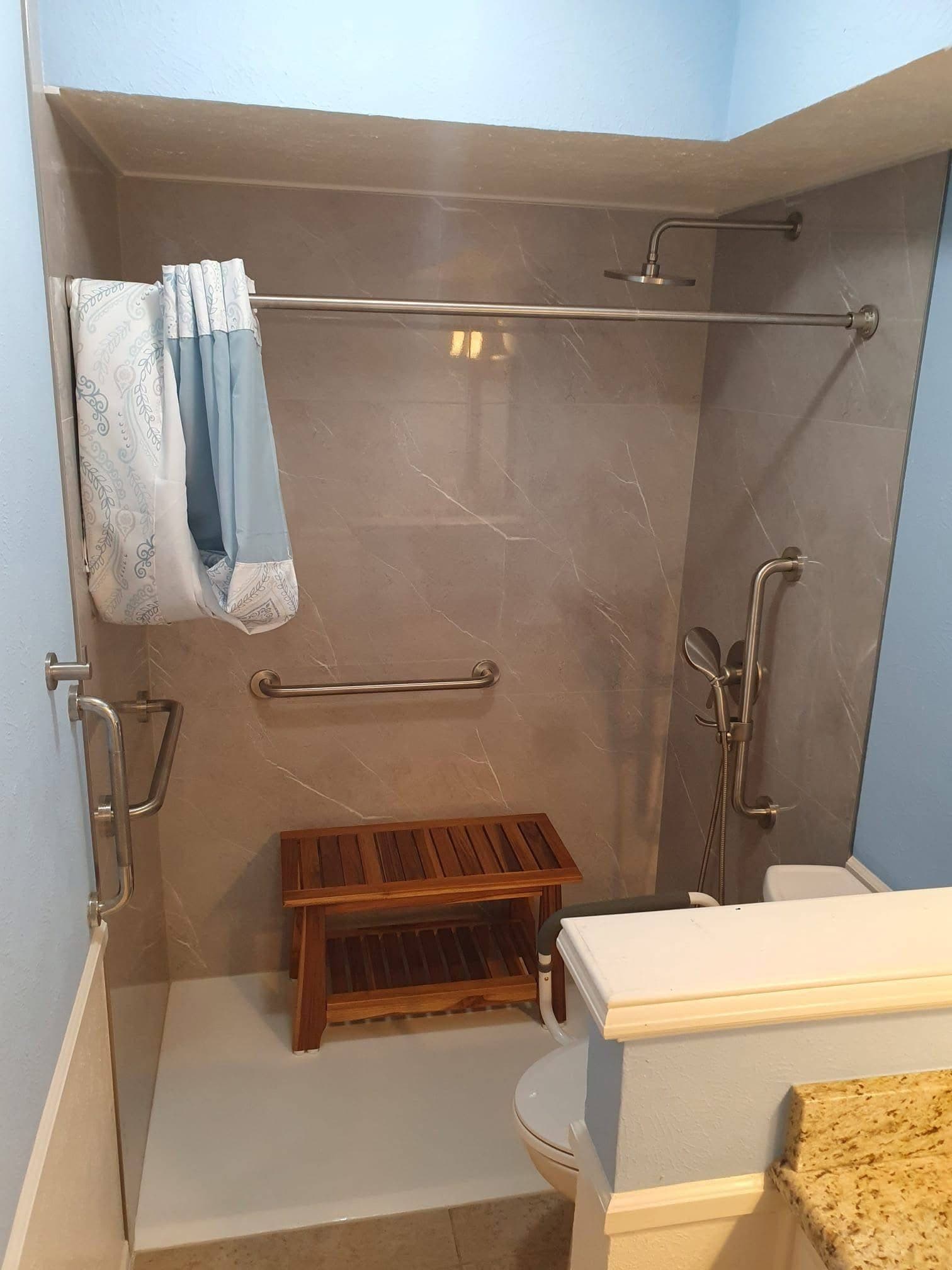
A conversion keeps the work inside the existing bathroom. We remove the tub, waterproof the opening and install a shower with a low or zero-height entry, a slip-resistant floor and a handheld shower that works sitting or standing, so the bathroom fits the person using it today. Grab-bar blocking goes into the walls as standard, so bars can be placed exactly where they are needed now or added later.
What's Included
Frequently Asked Questions
Our North Richland Hills home has a heavy cast-iron tub. Can it be removed?
Yes. Cast-iron and enameled steel tubs are heavy, but they can be removed like any other tub. We take the tub out completely, inspect the framing and plumbing behind it, and build the new shower in the same space.
My parent lives in an older NRH home and struggles with the tub. What should we look at first?
Start with the entry height, a place to sit, and something solid to hold. A low-threshold or curbless base, a handheld shower and properly blocked grab bars cover most needs. Our CAPS-certified team walks through the bathroom with you during a free in-home assessment and suggests what fits.
What if there is old damage behind the tile once the tub comes out?
In bathrooms that have been in use for decades, that is possible. If we find damage after demolition, we show it to you, explain the options and get your approval before we continue.
Is a permit required for a tub-to-shower conversion in North Richland Hills?
We confirm requirements with the City of North Richland Hills for your specific project and handle any permitting needed.
Contact EverSafe Showers
Veteran-Owned & Family-Operated Bathroom Remodeling Professionals